Interactive Tour Builder
Working hard to deliver best Virtual Reality experiences for Real Estate
How to Sell Mansions With 3D Luxury Home Tours
Virtual reality technology is not something new and yet it’s become the latest buzz word. What was once considered the technology of the future, virtual reality is fast becoming a powerful marketing tool for many of today’s businesses. Industries are turning to this technology to sell their services and products. Not wanting to be left behind, realtors are incorporating virtual tours into their own marketing and sales strategies.
As a real estate agent, you’re transforming your approach to showing and selling luxury homes. Potential clients searching for their dream luxury home want to do so from the comfort of their own living room. Immersing themselves in a virtual tour million-dollar homes have now become easily accessible for potential buyers.
By using experts in the 3D and virtual reality technology market, you can create virtual tours of mansions for sale on your listings. Discover the possibilities when immersing your clients with virtual 3D luxury home tours. If you’re wondering how to use this technology to assist you in selling luxury homes, read this article to find out more about virtual tours.
Table of Contents
What you Need to Know About Virtual Tours of Mansions for Sale
As a realtor selling luxury homes, finding the right buyer is challenging. To capture this potential market, the first thing you do is list your portfolio online. In days gone by, you relied on high-quality photographs to entice your buyer. The next step would have been a physical viewing of the home. If it’s not the buyer’s dream home, the process starts all over again.
While the convenience of online searches saves time and money, virtual tours of mansions for sale simplifies the process even further. The buyer, in their own time, can view and find their dream home when they’re ready.
1. Incredible Opportunities for Growing Your Business
The advent of virtual reality technology has expanded the realtor’s potential to grow their business. Revolutionizing the buying experience through the Internet, 3D luxury home tours enable the potential client to view homes at the touch of a button. And your client can be based anywhere in the world.
Virtual reality technology grows your business globally. No longer are you limited to the local market. By reaching a broader clientele base, selling a million-dollar home becomes a whole lot easier!
2. How do Virtual Tours Work for Your Potential Client?
Web based virtual tours are uploaded onto your website. By including 3D and virtual reality tour features on your website, your client will be able to access any luxury home you have listed.
Your potential client can take virtual tours of mansions for sale via their smartphones or their personal computer. With the use of a VR headset, your client can view the home without physically being there.
While sitting on their own couch, potential clients will be taken on an immersive virtual tour of the home. They can explore all aspects of the space, internally and externally. The highly realistic tours will give the buyer a 360-degree view of all the rooms.
3. The Benefits of 3D Luxury Home Tours
We’ve mentioned some benefits of using virtual tours. There are others to consider. So, if you still need convincing virtual reality is the way to go, read on.
- A captive audience: If your virtual tour is well-designed, your client will be kept engaged. Virtual tours create an interactive and immersive experience for the potential client. By captivating their attention, your client will become emotionally connected with the home they’re viewing. This will increase the potential of a sale.
- Cost-effective: How many times have you waited at a home for a client, only to have the appointment cancelled? Or spent endless hours sitting at a show house, with only the neighbor popping in to view out of curiosity? Time is money and every business knows this. Virtual tours will not only save your client time and money, but also yours. As your client previews potential homes online, you’re freed up to do your own thing.
- Reaching your target audience: By including virtual tour features on your website, you’ll reach your target audience quicker. By targeting your audience, you will minimize the risk of showing a home to someone who does not have the right budget. Or who is looking for something completely different to what you thought would suit them.
- Simplifies sales strategy: Virtual tours will simplify the way you approach sales by conveying the right marketing message to the right buyer.
- Key selling points: A virtual tour can be created to include all the key selling points of a luxury home. With minimal effort, you can tailor the features according to the needs of the client.
- Surrounding environment: A 3D virtual tour can include the environment surrounding the luxury home. This will increase the buyer’s confidence in buying a home if they know what the area looks like.
- Security: A growing concern in recent years for real estate agents has been security. With crime on the increase, open show houses have become an easy target for criminals.
4. Virtual Tours Can Convert Your Million Dollar Homes Into Sales
Sales are what drives a successful real estate agent. Selling million-dollar homes can seem impossible at times and yet there’s always a potential buyer out there. It’s your job to find them. If ever there’s been a time to revise the way you do business with affluent clients, the time is now.
Maximize your success by offering high-quality service to your potential buyers and sellers in the luxury home market. Working with affluent buyers and sellers has enormous payoffs but it comes with fierce competition.
A key point every real estate agent is aware of is that marketing luxury homes is constantly evolving. Affluent clients can be demanding. They expect you to be at the top of your game. This includes your online marketing strategy. Create remarkable content and through a dynamic virtual tour million-dollar homes on your portfolio will convert to sales.
5. Making Sales During a COVID-19 Pandemic
We can’t ignore the fact that we’re living in a pandemic. Businesses are learning to adapt by being flexible in the way they do business. The real estate sector relied heavily on person-to-person contact. Overnight, the coronavirus halted this approach to selling.
The pandemic has also forced lower interest rates. The luxury home market has become accessible to a greater reach of potential buyers. Bearing all of this in mind, the real estate sector had to get creative. Virtual reality technology was the solution.
To tap into this potential, real estate agents are directing their clients to online listings. From there, 3D luxury home tours can be accessed. A successful real estate agent will keep finding ways of moving forward. By using virtual tours of mansions for sale, they’re keeping the sales process moving.
Virtual Tours: The Solution to Luxury Home Sales
Even when times are tough, there’s always a potential seller and a potential buyer in the property market. Astute real estate agents know this and by adapting they can still make sales. Virtual reality technology keeps you in the market. Don’t hold back – get an expert now to create the perfect virtual tours for your luxury home portfolio.
Virtual tours for Universities and Colleges benefits – Touring Campuses in VR modes
The industry of VR is one of the leading niches that are expected to completely change our future. For so long, we have relied on smartphones and computers to connect with people and visit websites, and it has always been in 2D screens. But, virtual reality will take this to the next level with immersive 3D websites, locations, and characters. Of course, this is touching a lot of industries, but one of the forerunners of this exciting future is virtual tours of college campuses. Unlike other domains such as business and healthcare, virtual tours of colleges and universities have been an easy feat for many tech companies to simulate for prospective students. They essentially require less interactive content than other apps, and even multiple methods can be used to achieve similar virtual touring experiences. But now, VR headsets are getting better and more immersive, and they will help students eliminate a lot of the hurdles that come with traveling to targeted colleges or learning about their future careers. Whether you are interested in VR for touring or just excited about its potential in general, read more to explore below how powerful it will be for students’ education and what kind of materials and VR experiences are being created by various companies.
Table of Contents
VR as The New Technology for School Tours
Some of the ways VR headsets gained traction have been through gaming and college tours. As early as 2015, there were already many apps and websites that offered a virtual journey through the grounds of different campuses through google cardboard. The virtual experience of students, though mediocre because of the quality of cardboards, was actually an exciting discovery for them. They could see a 360-degree video spanning all details and information of the college, all from the comfort of their beds. For example, in 2015 the university of Savannah College of Art and Design gave away 5000 cardboards for its accepted students to help them explore the university. (1) They were able to weigh the pros and cons while they were home first, and then visit the college to complete the enrollment process. In essence, what the students experience is a video through the perspective of the cameraman who wanders through the various sections of the university. So, the students feel as if they are being led by a touring guide, which is very similar to being there in person. This and many more examples have marked the start of the interest of universities and students in the potential of VR. In 2020, however, virtual tours of colleges have become an entirely different thing. Those uncomfortable cardboard goggles evolved into elegant cable-based and wireless headsets that are the escape of many gamers. The graphics have become high-end, the immersion is scary, and the performance is more powerful than the best smartphones. This is why in recent years VR companies have revolutionized college tours. If you wish to visit a specific school, you can now truly teleport into the high-end experience of the campus, with the exterior atmosphere made deeply realistic instead of recorded through 360-degree cameras. Plus, you have the freedom now to walk or teleport with the VR controllers throughout the university, making your touring feel as if you are really there.
Sophisticated Websites that Offer VR College Tours
Virtual reality content doesn’t just rely on apps on special platforms, but are also, in fact, accessible to you via websites. With a cheap cardboard VR or sophisticated headset, you can tour thousands of universities around the world and experience highly immersive graphics and smart ways to communicate with college administration. One of the best websites to offer these services is CampusTours. It’s a professional company that has created VR touring guides for more than 1,800 schools in the U.S, U.K, Canada, and many other countries. The tours include many types of media and interactive content that make your visits extremely insightful. For example, you will not only visit the campus square, administration, and library but also find out about the types of sports and practicing areas with your own eyes. If you need to ask a lot of questions, there will also be a feature in CampusTours that has ready answers for the kinds of inquiries that students often make. But, it’s still on the making and will be up on the website soon.
If you want to try another option, then you will definitely stumble on the YouVisit website sooner than you think. It’s a website rich with features, providing high-end virtual content, videos, photos, and information across all virtual headsets but also your phone and computer. That means even without a headset, you can have a feel of the 360 stitched videos of campuses through your phone. However, sophisticated headsets are worth the purchase for most students who need to explore a large number of colleges within a short timeframe. For these ambitious learners, knowing all your options is a must for finding the ideal college. YouVisit virtual tours of colleges cover 600 U.S schools, and it includes an immersive experience of sports playing fields and different parts of the campus. If your aim is an American school, using this website is a must.
What are VR Tours of Campuses About
VR tours of college campuses bring to the table engaging features that add up to your knowledge base even if you plan to travel in person. At the campus square in real life you will surely explore all of the facilities and easily talk to the school staff, but learning about a college is more than that. New VR apps and websites now give you a look into the college’s traditions, history, art center, and campus life. Sometimes you want to get closer to a college’s background or maybe understand the local culture that‘s embedded within the university and community of students. If the values and practices that are cherished within a university also match yours, you will be making an even smarter and nuanced decision. And nothing makes this more alive than how artistically and succinctly VR apps present these features and information. With in-person travel alone, you might be missing out on key information from students VR testimonials or the students ambassadors. If traditional touring has been limited all along, VR will be the opportunity to expand our research scope and depth. For some students, VR tours of universities might even be preferred over travel if they are not sure how to have a well-researched tour. Many students report that they are intimidated by sending personal emails to staff members or even talking to them in person. In this scenario, they benefit more by chatting with a bot in VR and asking it all the important questions without anxiety.
Why VR Tours for Colleges Are Getting Attention
As soon VR apps and videos began evolving, more and more students are rushing to own headsets and VR GEAR. Students across the globe have realized that they have had choices limited to their local location just because they didn’t have the budget or suffered from chronic illnesses or disabilities. The benefits of VR, therefore, have leveled the ground between the rich and poor in making their future educational careers a tap away.
In a study investigating the relationship between relocation costs and college attendance, it was found that students from low-income families are more likely to settle for local universities than distant ones. This has been associated with an access gap that was mainly caused by traveling costs and expenses. Across larger populations, this is a strong and impactful deterrent for students who want to thrive in their ideal college. The VR tech has been changing this because it has been increasingly more accessible to everyone.
The rise of the trend of VR is also owed to how the prices of headsets are dropping dramatically over the years and becoming an option for any student. Massive VR companies like Oculus, HTC, and Valve have pushed the boundaries even further in the last 5 years, making VR more mainstream not only for gamers but also for internet users like students interested in social VR apps or virtual tours of colleges and universities.
Benefits of VR Campus Tours for Students
The advantages of VR tours of campuses will change your touring experiences in many ways. Imagine having to explore a university while the rain is pouring heavily or the weather is extremely cold. Or what if your entire family needs to find out with you about your future college residence and help you in your decision-making. Going there with your family or in the bitter weather is sometimes out of the question, but these issues are immediately solved with a VR headset. Some of the typical benefits of VR tours of colleges include:
- Getting into college areas that may not be normally accessible for in-person touring.
- Not having to deal with bad weather or ruin the excitement of our trip because of the snow or rain.
- Expanding our opportunities for diverse colleges and beyond our local limits.
- Inspecting the structures of buildings, location of facilities within and outside of them, and the distances between classrooms, buildings, and residence halls.
- Spending a cheap amount of money on a headset that is both useful for your VR touring and satisfying your gaming needs if you have any.
- Allowing all your family members – including your grandma – to visit and share with you the touring experience in the comfort of your house.
Download E-book
Fun Facts about VR
Virtual reality has seen an unprecedented level of application in multiple sectors, and rightly so. The industry has grown exponentially too, creating avenues for new applications of VR in other sectors AND Virtual Reality Gaming
While exposure to various VR news reporting platforms, or direct applications of VR may lead you into thinking that you know all there is to know about virtual reality, we are here to say that nothing could be further from the truth.
Virtual reality takes advantage of sight and sound technology to catapult users into a virtual world. The VR industry has passed through a series of developmental and technological strides over the years, thus making it a dynamic industry.
Because of the series of changes which the VR industry has undergone, there are definitely some facts you never knew about VR.
Let’s explore some of them shall we?
Table of Contents
The first VR headset was patented in the 1960’s
Oh yeah! We bet you didn’t know that. You probably just got to know about VR a few years back. Perhaps, you probably believe that VR is an entirely new technological invention/concept which emanated only a few years back. Well, it isn’t.
As a matter of fact, the first VR headset was patented in the 1960s and was invented by Morton Heilig.
VR was once used to train US military personnel
VR isn’t only for gaming and entertainment purposes you see. It has been explored in different fields like business, education, health, and even the military. While you might find it difficult to believe, virtual reality was once used to train members of the US military.
Sony is the largest vendor of VR devices worldwide
You probably already know this, but do you know the secret behind Sony’s headsets, and why they have become so popular in the market today?
Well, here’s one Sony VR headset fact: Sony had a small group of engineers develop their Play station VR in a small lab in secret. It only became public knowledge upon completion. Amazing, right?
This Song PlayStation VR has become the top-selling VR headset in the work.
VR Devices aren’t all that expensive
You might probably believe that VR devices cost an arm, and perhaps a leg. A lot of people actually do still believe so majorly because they actually used to be expensive, but not anymore. VR devices are becoming readily available, and thanks to technological innovations, production costs have been impacted positively. The resultant effect, we can all keep our arms, and legs, as well as our VR devices.
Some VR devices currently sell for as low as $10 and are becoming increasingly less expensive by the day.
AR and VR are not the same things
While AR and VR can be used to complement each other, they are not one and the same, and shouldn’t be used interchangeably.
While AR enhances the real-life environment through computer images, VR enhances a virtual environment, making it seem like a real-life one. Aha, now you get it!
Virtual Reality is made possible through the Virtual Reality Modelling Language
Unless you are tech-savvy, you probably didn’t know this. The VRML is a coding language that enables VR developers to create images and specify the interactions for them.
There’s such a thing as motion sickness
Science News reports that up to 40% of VR customers experience motion sickness in varying degrees when using VR. So, when you feel nauseous or sickly during a virtual reality adventure, understand that this is quite normal, and your friends may be experiencing the same thing too.
Smartphones are the biggest enablers of VR
You thought it would be computers, right? Well, we were amazed when we discovered the truth, too. Apparently, VR is more likely to be an add-on on smartphones than computers.l
The name “Virtual Reality” was coined by Jaron Lanier in 1987:
Here you have it- another proof that virtual reality isn’t an absolutely new concept.
Virtual Reality is still a work in progress
We are yet to see the best of VR. The virtual reality that we are so hyped about right now, is just in its developmental phases. There’s a lot more to come from where these have come.
Partner with us
Media Library Management
Media Library Management
We offer easy to store and manage media library, that can be shared across multiple projects.
DESIGN
Unlimited Media Storage
Our software has unlimited storage, that you can upload any kind of multimedia assets either 360 panoramas, 360 videos or even regular 2D images. During tour creation, when you upload images into VR builder, it can be managed thourgh media library. Our unlimited storage means unlimited, we don’t add any hidden charges to the account.
SHARE
Fastest Delivery of Media
We offer fastest delivery of media assets in the Virtual Tours. Due to our partnership with most reputed cloud providers, all our data centers are equipped with most sophisticated cloud technology and hardware.
Virtual Reality Statistics 2020: Surprising Stats about Virtual Reality
Virtual reality (VR) and augmented reality (AR) continue to evolve and are gaining traction among consumers and businesses. Research firm IDC forecast in November 2019 that worldwide spending on VR and AR is on track to reach $18.8 billion this year. However, these two extended reality (XR), immersive technologies are growing at different rates and for different reasons. This report provides our latest forecasts for VR and AR users in the US and examines some market dynamics shaping their maturation.
How many people in the US will use virtual and augmented reality in 2020?
We anticipate that 52.1 million people will use VR and 83.1 million will use AR at least once per month in 2020. This represents 15.7% and 25.0% of the population, respectively.
Table of Contents
Eye-Opening Virtual Reality Statistics
- The global AR and VR market is expected to grow to $209.2 billion by 2022.
- Global VR video gaming revenues are expected to reach $22.9B in 2020.
- There are more than 171M VR users worldwide.
- 78% of Americans are familiar with VR technology now.
- The consumer VR market worldwide is set to reach $2.6 billion by the end of 2020.
- Demand for standalone VR devices will grow over 16 times between 2018 and 2022.
- 70% of VR headset-owning consumers have bought a game on it.
- 14 million AR and VR devices were sold in 2019.
The consumer VR market worldwide is predicted to reach $2.6 billion at the end of this year.
Virtual reality statistics for 2020 show that the coronavirus pandemic has had a negative impact on the VR market worldwide. This year, the consumer virtual reality (both the hardware and software segment) market size is projected to experience a decrease of $0.7 billion, compared to what we had in 2019.
VR/AR devices will see a growing increase in demand over the next few years.
Virtual reality sales statistics show that the number of VR/AR devices shipped worldwide is expected to increase to 68.6 million units in 2023. What’s more, AR and VR headsets are projected to have massive sales of over 30 million units annually by the end of 2023.
VR is gradually gaining ground in e-commerce.
VR stats for 2020 show that the adoption of VR in e-commerce can boost online shopping conversion by 17%. VR experiences can significantly influence the purchasing decision of customers.
80% of consumers feel positive towards experiencing branded VR tactics.
This is great news for marketers. Jaded by conventional forms of advertising, consumers are keen on trying out new formats that allow them to experience brand stories in a more intimate manner. This virtual reality report on marketing shows that the environment is ripe for marketers to move fast to capture audience interest.
20% of consumers say a branded VR experience would make them feel more positively towards the brand.
Only 1% would feel negative about it while the remaining consumers are neutral. If you have an advertising format where 1 in 5 customers are already in your favor for just using that format, it’s your battle to lose. According to the same research, VR also has high word-of-mouth marketability, with 81% of people who had already experienced VR reporting they had told their friends about it.
13% of consumers say VR experiences will cause them to shop more in physical stores.
While more conventional and non-tech-intensive methods like F&B offerings, personalized experiences, and live product demonstrations remain the main draws for customers in physical stores, virtual reality trends show that VR experiences are catching up as a technology investment that business owners can make to encourage customers to spend more.
75% of the World’s Most Valuable Brands have invested in some form of AR/VR experience.
Leading brands are catching up to the potential of VR. The number of these experiences, which could be meant for consumers or employees, is likely to be much higher considering that this data is from a 2015 research.
13% of people who experience a vacation in VR go on to book a trip or get in touch with hospitality companies.
The lifelike rendering of experiences encourages consumers to spend money to experience the real deal, too. Similar virtual reality statistics include:
- A 16% increase in donations to Amnesty International UK’s donations after people experienced conditions in war-torn Syria through VR.
- A 190% increase in Thomas Cook’s VR-promoted New York excursion revenue.
- 51% of Marriott’s customers expressing intent to travel to more hotels in the chain after the company showed VR travel stories from other locations to them.
Did you know that virtual reality has been around for quite some time? It was created in 1968 by computer scientist Ivan Sutherland and his assistant Bob Sproull. And the technology is continuously evolving every day.
While some people are still skeptical about this great innovation, it is actually a tool that can change the way we interact with the world around us.
To Be or Not To Be: Surprising Stats about Virtual Reality
The argument for or against virtual reality has raged on. We stand with virtual reality because we believe it is the future. Here are some surprising statistics about VR that may change your mind about the technology.
VR is the Fastest Growing Technology in the World.
VR is undoubtedly the fastest growing innovative technology in the world. Starting since 1968 as a mere headset, it has grown, expanding its reach and functionality into various fields, ranging from gaming all the way to medicine. VR is now applied in over 19 fields, ranging from health care to the military.
This makes VR a formidable force within technological spheres.
In 2019, more fields were incorporated into the VR sphere, raising its market share to over USD 10 billion. For a market that was almost nowhere to be found in the early 21st century, this is a great achievement. If you won’t say it, we will.
VR is the Future Of Entertainment
The third item on our list of surprising stats about virtual reality has to do with the future of entertainment.
Talk about entertainment today and you can safely say that VR is the future of entertainment. Popular gaming companies like Sony and Microsoft have turned largely to VR to enhance and improve the gaming experience of their customers.
For Sony, its PlayStation IV gaming console is VR enabled. Microsoft is also doing a lot to make VR the norm for its gamers. In 2019, Sony was responsible for over 40 per cent of VR shipments worldwide.
VR doesn’t just serve for gaming but is in use in the movie industry too. Most cinemas now use VR technology to give customers optimal experiences.
VR and a Mobile Users
Majority of VR Users around the World are Mobile Phone Users. Almost 80 Percent of People Using VR in the United States are Mobile Phone User.
This means that VR would likely tend towards private and personal usage as time goes on. With over 170 million active users in the world, a greater percentage of these users, are using the VR services with their mobile phones.
The World is Coming to Terms with VR
Another surprising stat about virtual reality. The current statistics indicate that VR is gradually becoming a household name. It is reported that a whopping 14 million AR and VR devices were purchased worldwide in the year 2019. Also, 70 percent of VR headset users have bought a game on the headset.
A large percentage of Americans are now familiar with VR technology. With America being the seat of world trends, it would not be wrong to predict that the world would be swallowed up in a VR craze anytime soon.
Is The Future VR?
That’s the question that we all have to consider now. But if we follow the statistics, believe that things may maintain this trajectory, it would be safe to say that the future is VR and VR in the future.
Do you have some more surprising stats about virtual reality? Please feel free to add in your comments.
Virtual Reality in Entertainment
Considering how advanced and realistic virtual reality is, it isn’t a surprise that the entertainment industry has found so many uses for it. The gaming industry has integrated virtual reality across several platforms that allow gamers to enjoy a more immersive experience. A good example is the PlayStation VR made by Sony Interactive Entertainment. It is a first generation VR headset that functions with PS4 and PS5 consoles.
Virtual reality in entertainment involves the simulation of different visual scenes integrated with audio. These scenes could be related to some game scape or a movie. In addition to VR for games, there are also museums that have adopted the use of virtual reality. This gives the museum’s visitors a chance to experience interactive exhibitions/displays. Themed parks, galleries, and theatres have also joined in the VR trend.
Table of Contents
Gaming’s Dominance of the VR Entertainment Market
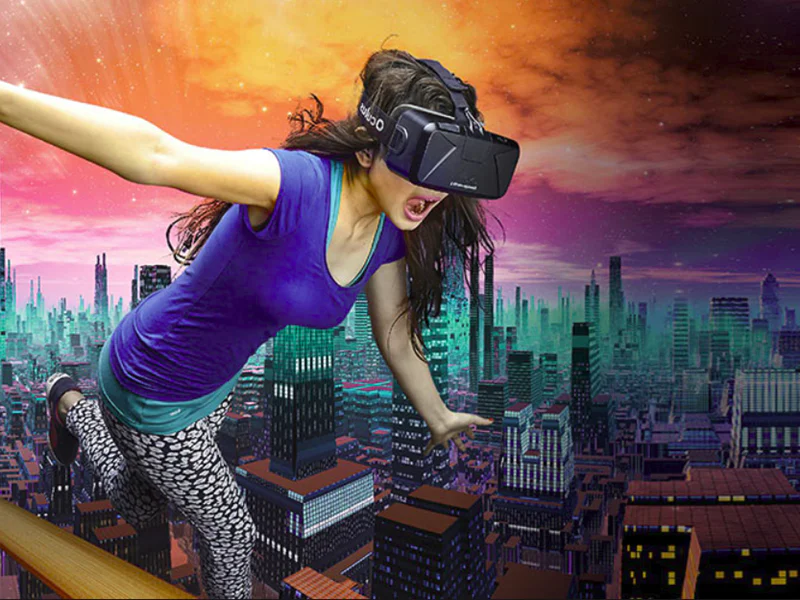
VR entertainment covers different sectors. However, the global gaming sector holds the lion share of profits generated through virtual reality. Billions of dollars are generated from VR in gaming annually. Just in 2019 alone, about 5.12 billion USD was generated from the global VR gaming market.
According to globenewswire.com, the global VR gaming market is expected to attain a value of 40.2 billion USD in the next four years (2024).
The PlayStation VR, amongst others, is a reflection of how much money is made from VR in gaming. The PSVR is calculated to have generated almost 2 billion USD for its parent company, Sony. Other games like the Xbox and Nintendo Wii VRs have also made a lot of money.
Virtual Reality gear can be really expensive. Because of this, some gamers can’t afford to purchase a personal VR gear. There are certain sections in malls and other locations that are dedicated to VR gaming and VR entertainment in general. These centers are created for access to VR entertainment at pocket-friendly prices.
Areas of Entertainment Where VR is being Used
The applications of virtual reality in the entertainment industry keep increasing. There are some interesting applications that have been established across the world to increase the customer base and improve customer experience.
Virtual Reality in Theater
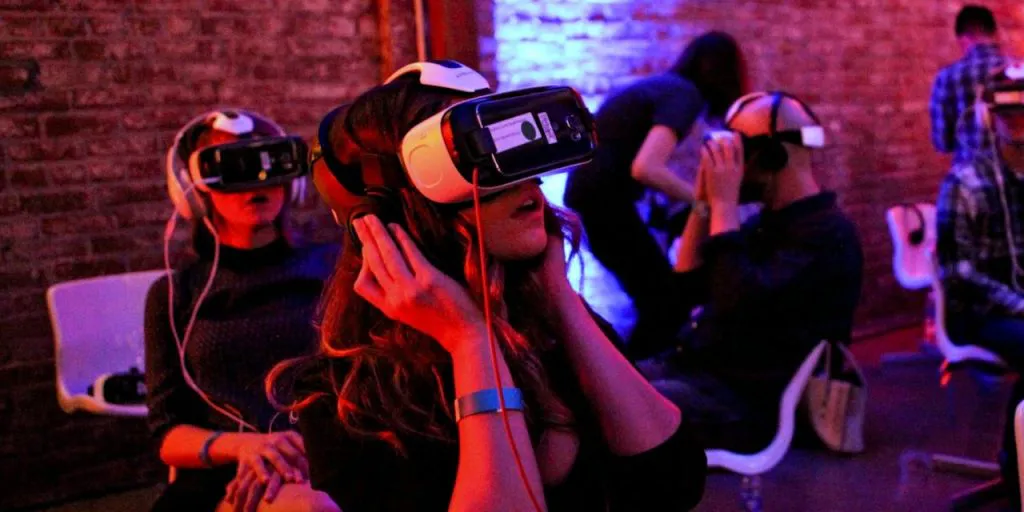
Theaters are now being created with an integration of virtual reality. These theaters, known as immersive theaters, are made to be more interactive for the audience. Instead of sitting back and watching actors/actresses perform shows on a stage, the audience is pulled into a more immersive and interactive show via the use of VR headsets. The fact that the audience can be actively engaged in the theater’s shows makes immersive theater a potentially lucrative business. Immersive theaters draw a large crowd – this reflects how much interest people have in them.
Virtual Reality in Museums
Unlike traditional museum visits where you drive to a location to observe ancient artifacts, dinosaur bones, and more, some museums now use virtual reality to provide customers with realistic experiences through applications on mobile devices. The implementation of museums through VR is similar to the use of 360 tours in real estate.
Museums can also be crowded sometimes, especially when a world-famous piece is on display. Visitors may not get a good view of their favorite artifacts before leaving the museum. Virtual reality solves this problem by giving many people the room to view different displays without any hindrance.
Generally, there are many advantages that VR has brought into the museum business. All these advantages boost the profitability of museums.
Virtual Reality in Gaming
Virtual reality is growing exponentially in the gaming industry. Players are able to “enter” the game for a more realistic and fascinating experience. Through the use of VR headsets and VR controllers, players can navigate through the game while beating levels and completing challenges.
Thanks to headsets like the Oculus Quest, HTC Vive, and PlayStation VR, traditional games played on Television or Laptop screens are now available in more interactive forms.
VR games are available in different genres like adventure, first person shooter, and more. Some of the excellent VR games available for purchase include Beat Saber, Budget Cuts 2, Danger Goat, Everybody’s Golf, and lots more.
Virtual Reality in Amusement Parks
Considering the number of amusement parks we have today, and their many wild rides, there is a great level of competition for visitors. However, parks that are able to provide unique and innovative features would get the most visitors. The use of virtual reality on different rides is a feature that attracts more visitors to parks.
With the use of VR, there’s a better level of flexibility with creativity. Different captivating themes can easily be created for the amusement of visitors on rides. For instance, scary themes can be made for Halloween.
Virtual Reality in Music Concerts
The music industry hasn’t been left behind in the adoption of VR entertainment. Major events in the music industry like Lollapalooza, Sziget Festival, Coachella, and others have been integrated with VR performances.
Some solo artists and music bands have also adopted the use of virtual reality for live presentations. This addition to musical events has created a solution for many previous challenges. Fans can now experience their favorite artists perform while getting an excellent 360⁰ view.
Apart from live concert setups, other significant places relating to artists and recording studios can be visited through VR implementations.
Conclusion
The entertainment industry is very competitive. Different companies want to expand their customer base and make the most profit. For an entertainment company to stand out, it must be able to follow trends and advancements in service delivery methods. Virtual Reality is a modern solution to several problems associated with traditional entertainment methods. VR entertainment gives room for more flexibility in product delivery and also unlimited creativity.
The global gaming industry yields the most profits from the use of virtual reality in entertainment. The VR gaming sector keeps growing and attracting more players. With the use of high-end VR headsets and controllers, players can navigate through immersive gamescapes and interact with the simulated environment.
Other entertainment sectors like the movies, theme parks, music, and theatres also use VR. This makes their business more lucrative.